The Kamloops Gondola - A Case for Urban Ropeway Infrastructure
Introduction
Urban ropeways, gondolas, aerial trams, cable cars, have earned a reputation in some quarters as novelties. That reputation is increasingly hard to defend. From Medellín to Bogotá, from Portland to Whistler, gondolas have proven their case as viable, efficient, and often transformative pieces of urban infrastructure. They work in large cities and small ones, in historical contexts and modern ones, and they keep working long after the ribbon-cutting headlines have faded.
The Kamloops proposal builds on that track record, and goes further. Most urban gondola projects solve one problem: they move people up or down a steep hill. The Kamloops Gondola solves three simultaneously. The Kamloops Gondola functions as a tourism attraction, a conference and tournament access solution, and a year-round transit asset for locals, students, and families. No comparable project in British Columbia attempts all three.
The relatively low capital cost, simple land alignment, fast journey times, and low-labour operation combine with an unusually strong set of existing civic investments, the Aberdeen Multiplex, Tournament Capital Centre at McArthur Island, TRU, and the new Build Kamloops arena complex, to make a case that is more than compelling. On its merits, this project is overdue.
This brief makes the case for three distinct gondola users. We call them the Day Ticket, the Weekend Pass, and the Season Ticket.
The Day Ticket user is the tourist passing through on a BC road trip, the person who stops for an hour, takes in an iconic view, and turns a one-night stay into two.
The Weekend Pass user is attending a conference or tournament in Kamloops, staying in Aberdeen, and needs fast, convenient, parking-free access to five days of games at McArthur Island or events at TRU.
The Season Ticket is the recurring revenue that underwrites everything else, the TRU student who is tired of the parking lottery, the North Shore parent who wants to drop their kids at practice without driving across town, the commuter who has realised that the Gondola makes almost every bike trip in Kamloops almost entirely downhill.
Each of these users represents a different revenue stream. Together, they make the business case resilient across seasons, something neither the Squamish nor the Vernon models, with their heavier reliance on tourism day-trippers, can fully claim.
The Proposal at a Glance
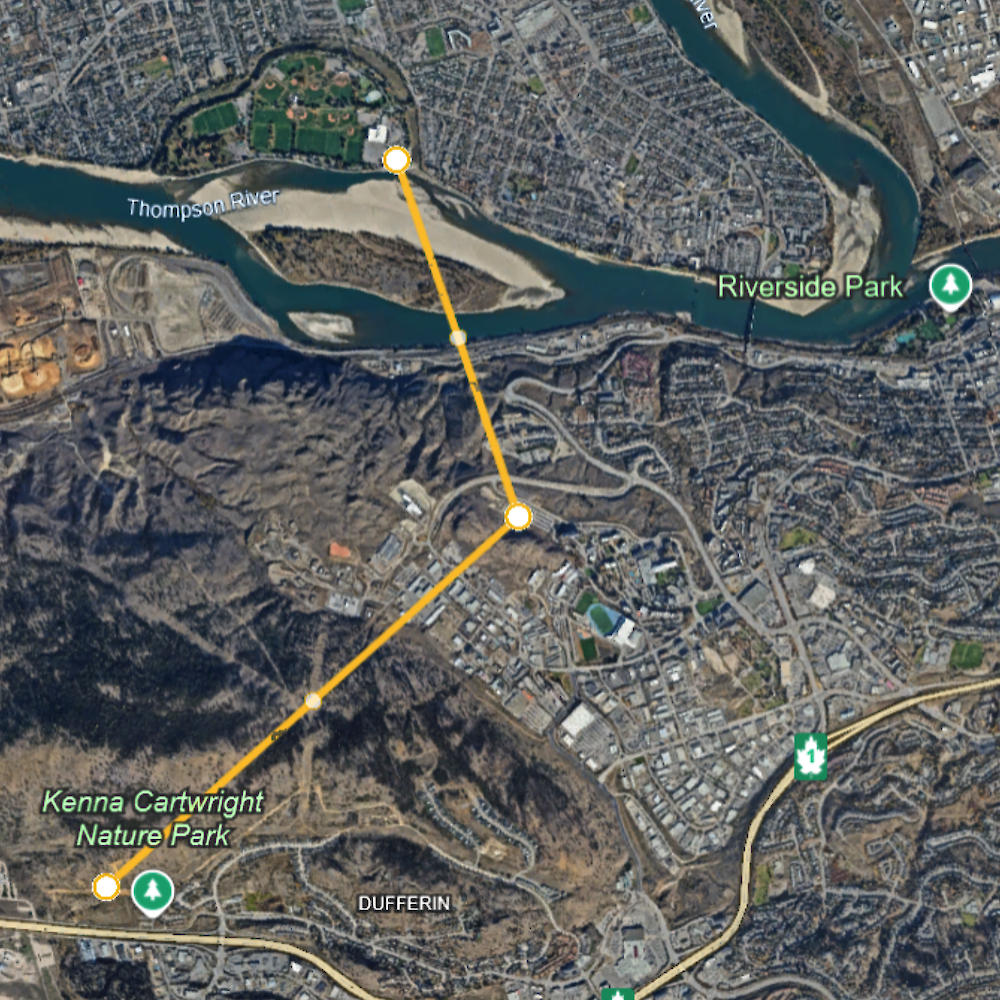
Route: McArthur Island to TRU (Lot NT) to the Aberdeen Multiplex (Kenna Cartwright)
Capital cost: $60 million for the ropeway and three stations
Funding pathway: Fully fundable through the sale of underutilised serviced land at each station, without requiring municipal budget commitments
Revenue model: Three distinct user groups, tourism, events, and transit, providing year-round income across all seasons
Journey time: Approximately 9–11 minutes end to end; estimated 5–6 minutes Aberdeen to McArthur Island, compared to 15–18 minutes driving including parking
The Alignment
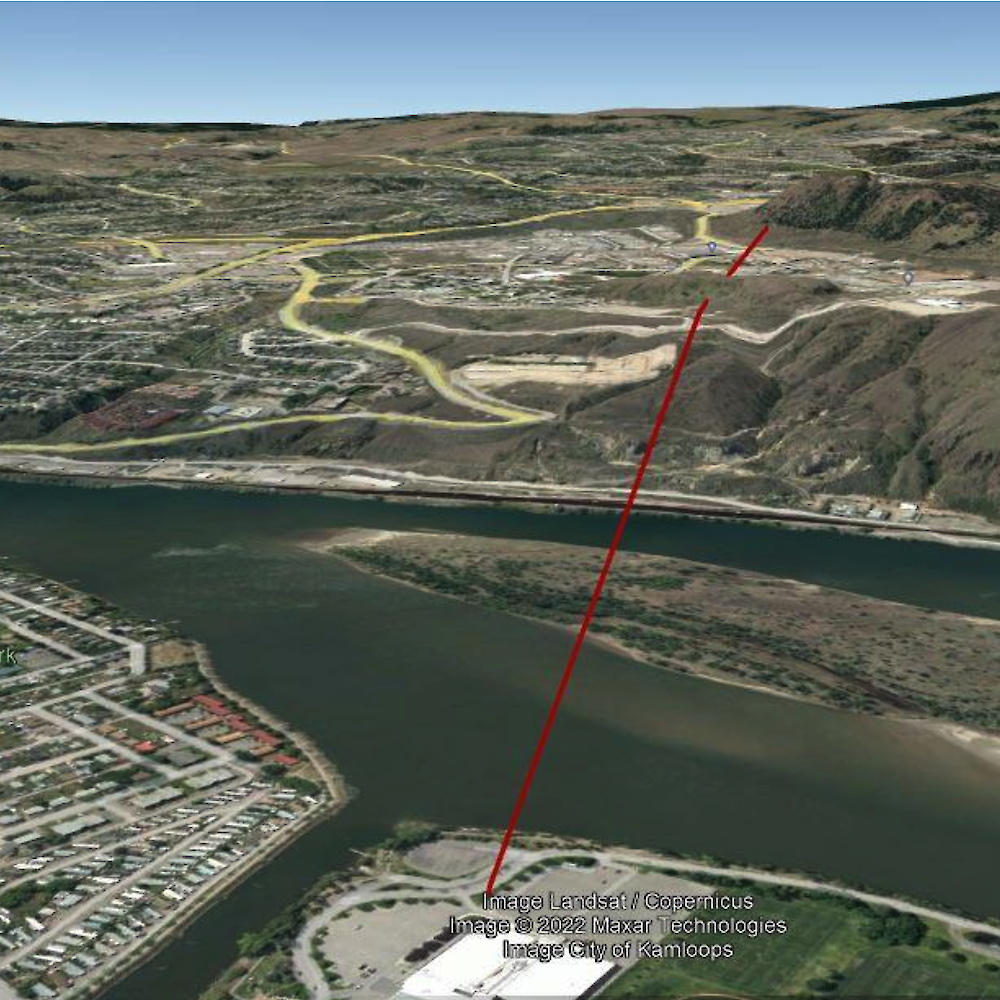
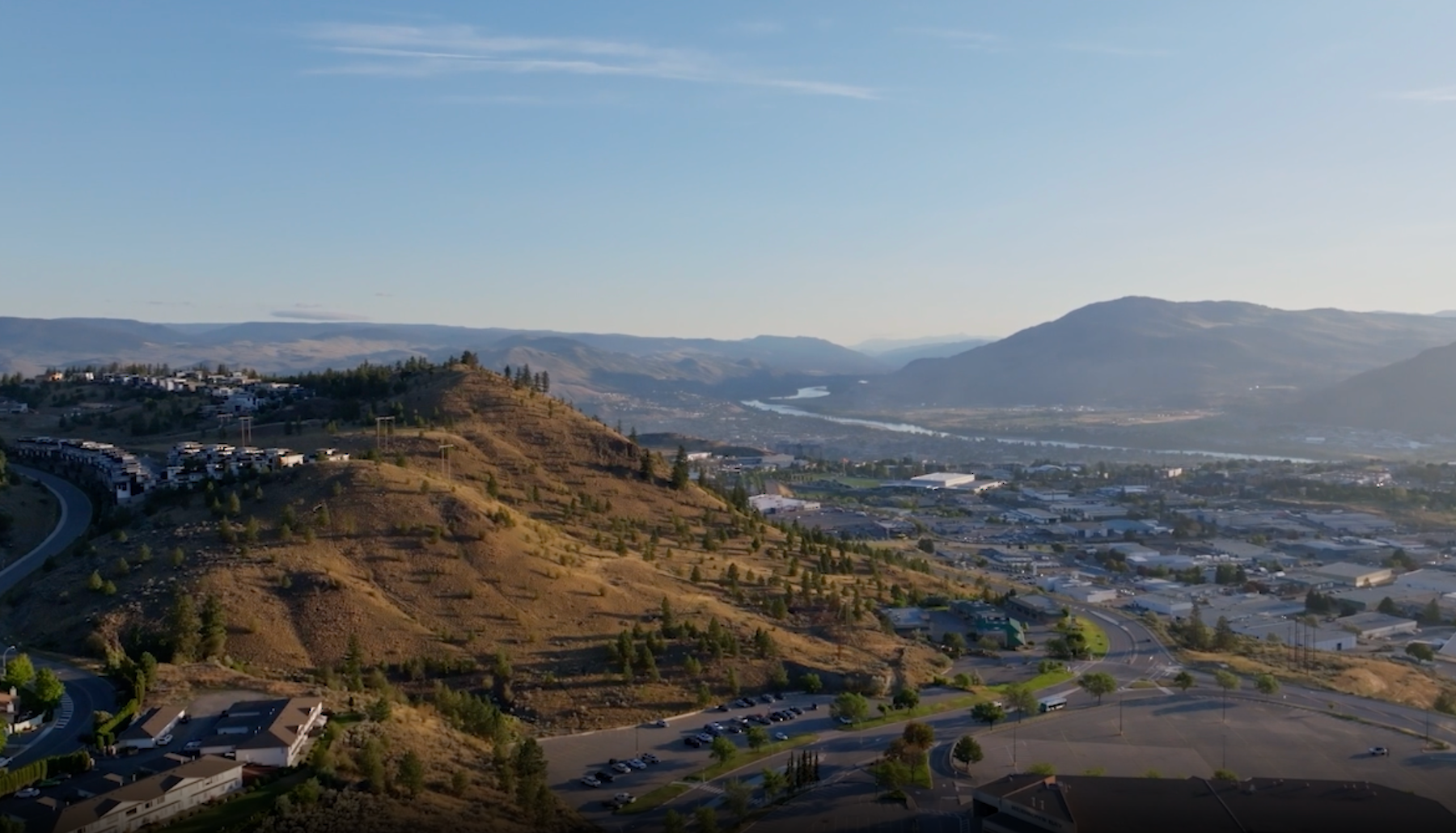
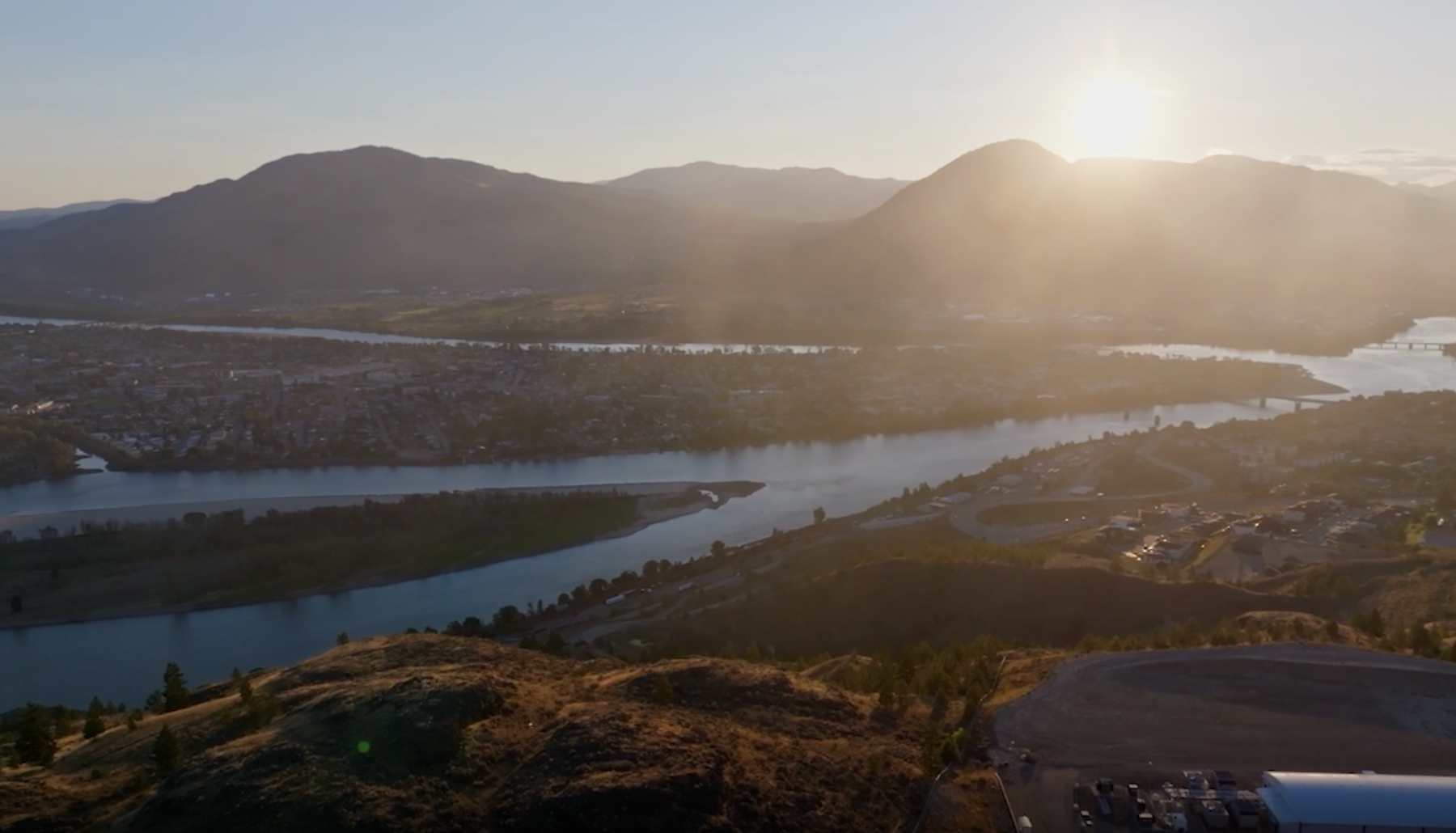
The gondola runs from the southeastern corner of McArthur Island, up through TRU's Lot NT viewpoint site, to the Kenna Cartwright area adjacent to the new Build Kamloops arena multiplex. The full route covers three kilometres of largely publicly-owned land, crossing overhead of TRU, City, and Crown-owned parcels.
The alignment does pass over BC Hydro transmission lines and CP Rail tracks, which adds engineering complexity. The preferred alignment minimises passage over private land significantly compared to urban gondola projects elsewhere in BC.
What makes the Kamloops alignment exceptional is its land ownership profile. The largest single cost and logistical barrier in urban gondola development is almost always land rights, negotiations with private property owners, easements, compensation, legal challenges. The SFU Burnaby Mountain Gondola project, a comparable BC case currently in the funding and approval process, has spent years managing exactly this challenge as its route crosses through the established Forest Grove neighbourhood, requiring engagement with affected homeowners and four Indigenous Nations. Kamloops faces a fraction of that complexity.
The alignment also connects three of Kamloops' most strategically important existing civic investments to each other, and to the city's hotel stock, for the first time.
The Gondola Journey
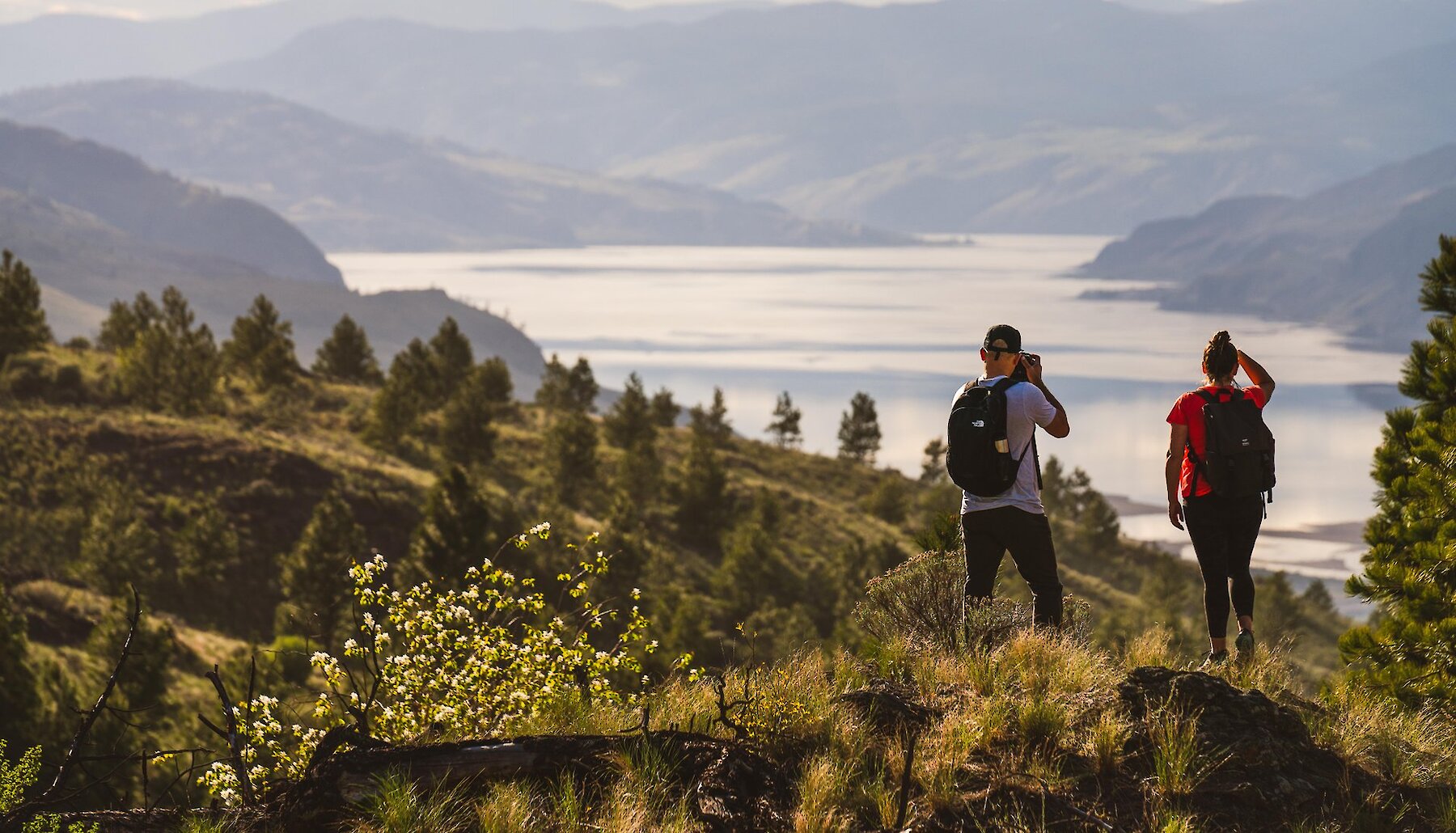
Kenna Cartright Park
Dylan Sherrard
Business Case
Inexpensive Operation: Why Gondolas Are So Efficient
Energy
Gondola systems are counterweighted: each cabin travelling uphill is offset by another travelling downhill. The net energy required to move passengers is substantially lower than any road-based vehicle. A fully loaded gondola consumes approximately 0.1 kWh per passenger-kilometre, roughly three to five times more efficient than a single-occupant car, and competitive with or better than a bus at real-world urban occupancy levels.
When the downhill load exceeds the uphill load, the system actively generates electricity, which is stored and reused. This regenerative capability means that at busy periods, the gondola partially powers itself.
It is also worth noting that 50% of vehicle emissions are not produced at the tailpipe. Brake dust, tire wear, and the embedded manufacturing energy of vehicles account for half of their lifetime environmental cost, and electric vehicles do not address these factors. A gondola eliminates them entirely for every trip it replaces.
Staffing
A city bus requires a Class 1 licensed driver for every vehicle, each carrying a maximum of 40 to 60 passengers. A gondola station requires a small team of attendants, typically two to six per station per shift, plus periodic maintenance crews. Yet that same gondola delivers up to 3,600 passengers per hour per direction.
The operating cost of a comparable gondola system is roughly equivalent to running eight buses, but the capacity delivered is that of several hundred buses at peak throughput. This staff efficiency is also what makes extended operating hours economically viable: running a gondola until midnight costs a fraction of what running a comparable bus fleet would cost.
The Environment
Historical Precedence
A gondola is not a new idea in Kamloops. During the First World War, a ropeway operated on this alignment to transport munitions from the Canadian Pacific Rail lines below to storage bunkers that now sit inside the City of Kamloops Public Works yard. Those bunkers still exist.
This history provides a tangible, place-specific story that connects the proposed infrastructure to the city's past, and creates an opportunity for heritage interpretation along the route. A hiking trail from the TRU Lot NT station to the bluff overview, and onward to the WW1 bunker sites, could become a cultural attraction in its own right, integrating museum and interpretive development into the gondola experience at minimal additional cost.
For a project that will inevitably face the question "why here?", the answer has a hundred-year precedent visible in the landscape.
Leverage: Economic Development
The strongest argument for the Kamloops Gondola is not the gondola itself. It is what the gondola makes viable at each station.
Tourism Kamloops' CBRE-validated Investor Lookbook identifies a Nordic Spa, an Iconic Tower and Adventure Park, and a Skywalk over the Hoodoos as the three highest-return tourism investment opportunities in the Kamloops region. Two of those three have a natural home at TRU Lot NT, a site that, without the gondola, is attractive. With it, the site becomes genuinely compelling.
Capital Funding Through Transit-Oriented Development
The Developer Proposition
At a high level, the three station sites represent approximately 1.2 million square feet of developable land. Based on conservative estimates using comparable mid-rise mixed-use development valuations in Kamloops over the past five years, this land represents over $100 million in potential value, enough to fully fund the gondola capital build with significant surplus.
The P3 model is straightforward: a developer builds out the physical ropeway and station infrastructure in exchange for a profit-share arrangement on land sales and leases, plus a long-term operating contract. The City of Kamloops and TRU provide the land on long-term lease. The City recovers its investment through Development Cost Charges and an expanded tax base, with no direct capital outlay required.
Indicative land value by station, conservative mid-rise mixed-use estimates
Site Specifics
TRU: TRU Lot NT and adjacent underdeveloped parcels on TRU's western edge represent the highest-value development opportunity in the alignment, given the views and the existing institutional demand for hotel and conference space adjacent to the campus.
Aberdeen Multiplex: The Build Kamloops arena development brings significant new visitor demand to the Kenna Cartwright area. The gondola station here converts that visitor demand into a multi-stop Kamloops experience, not just an event attended and departed, but a reason to stay, explore, and return.
McArthur Island and the North Shore: The McArthur Island southeast corner offers riverfront commercial development potential with strong existing connectivity and proximity to Kamloops' established North Shore commercial corridor. Hotel, residential, and conference uses all have natural demand anchors here in the form of the Sport and Event Centre and the Rivers Trail.
Case Studies
Frequently Asked Questions